
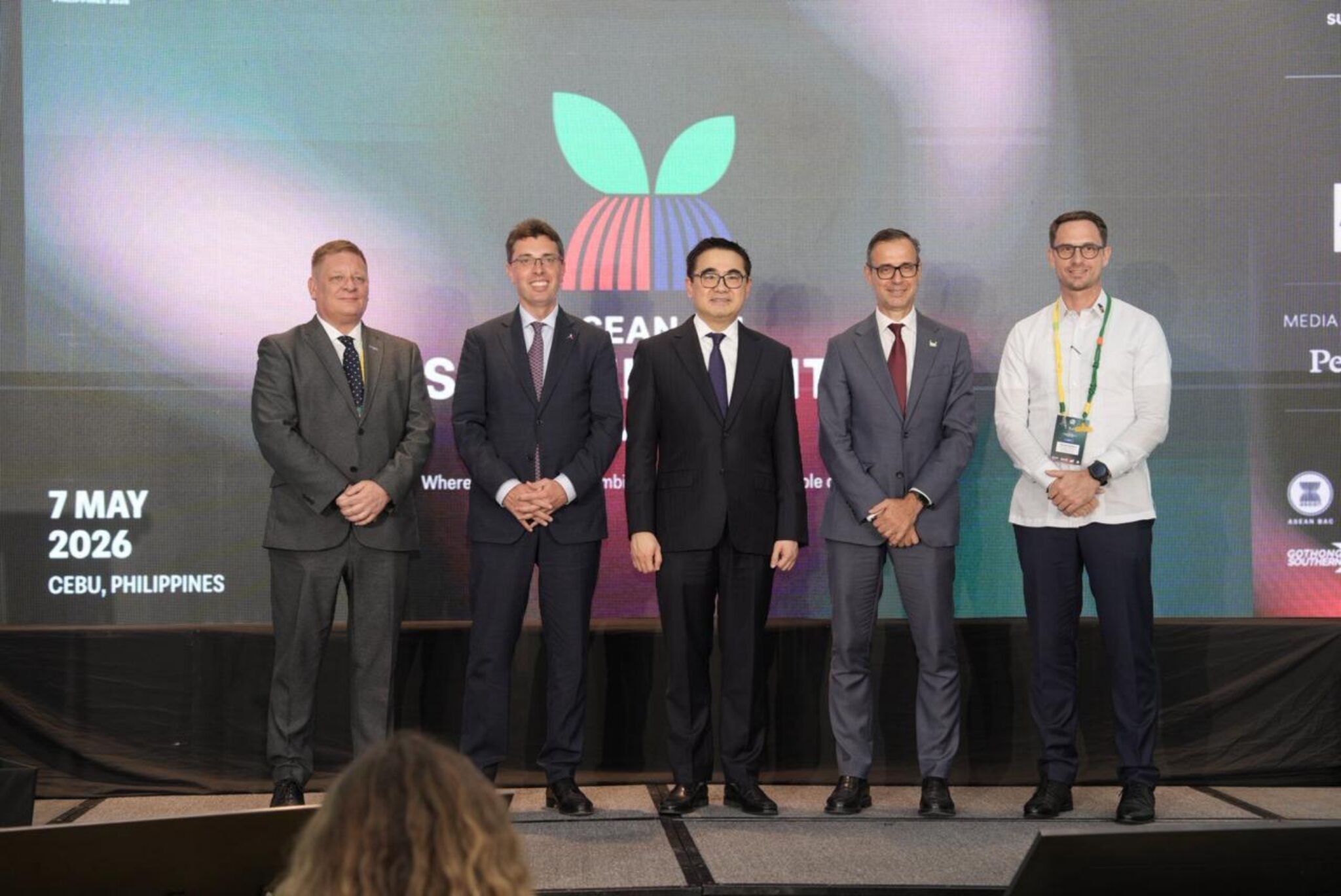
MANILA, Philippines — Southeast Asia’s climate ambitions may fall short without stronger financing support and more concrete implementation mechanisms, European Union (EU) Ambassador to the Philippines Massimo Santoro said on Wednesday.
As Association of Southeast Asian Nations (Asean) and EU leaders gathered in Cebu for the inaugural ASEAN-EU Sustainability Summit, Santoro warned that while policy commitments are in place, these alone would not be enough to address the region’s growing climate vulnerabilities.
Echoing other leaders, he reaffirmed that “[s]trengthening the link between ambition and financing is essential to turning policy into real, on-the-ground impact.”
Without sufficient financial support, Santoro warned that even well-designed legislative frameworks risk stalling at the planning stage.
The EU envoy also underscored the importance of partnerships with major lenders such as European financial institutions and the Asian Development Bank to expand climate initiatives beyond pilot programs.
“For us, the development partners, and for the governments, Asean governments, partnering with these financial institutions is the way to ensure that what happens at the pilot project level becomes scalable, becomes a larger impact and a larger positive effect,” Santoro said.
He likewise described the private sector as the “only one able to guarantee the sustainability of the action which is currently going at government-to-government level.”
He said the private sector can provide expertise needed for climate resilience projects, including technical knowledge on resilient infrastructure, risk management, and other systems needed to implement sustainability policies.
A separate report presented during the summit by advisory firm Penta found that Asean sustainability efforts remain heavily focused on “broader themes” and policy announcements, with “less emphasis on execution and measurable outcomes.”
The report noted that while energy transition has emerged as one of the region’s most credible pathways toward long-term resilience, sustainability initiatives in areas such as circular economy and sustainable agriculture remain underdeveloped.
Robert Borje, executive director of the Philippines’ Climate Change Commission, speaking at the panel, also warned that climate financing could become even tighter due to ongoing geopolitical tensions.
“Resources are always limited,” Borje said. “In the current geopolitical realities that we have, resources will be tight and will probably become even tighter.”
The remarks came as the Philippines faces growing energy challenges after the country was placed under a state of national energy emergency due to the impact of the conflict in the Middle East.
The summit was organized by the EU-Asean Business Council and the European Chamber of Commerce of the Philippines, as endorsed by the Philippines’ Department of Trade and Industry, under the auspices of the Philippines’ 2026 Asean Chairmanship.
The event is marked as one of the official sideline events of the 48th Asean Leaders’ Summit.



Serving the European-Philippine business community since 1978, the ECCP remains committed to enabling cross-sector collaboration, promoting economic growth, and championing a sustainable future. For inquiries or further information, you may contact us directly or connect with us through our official social media channels.